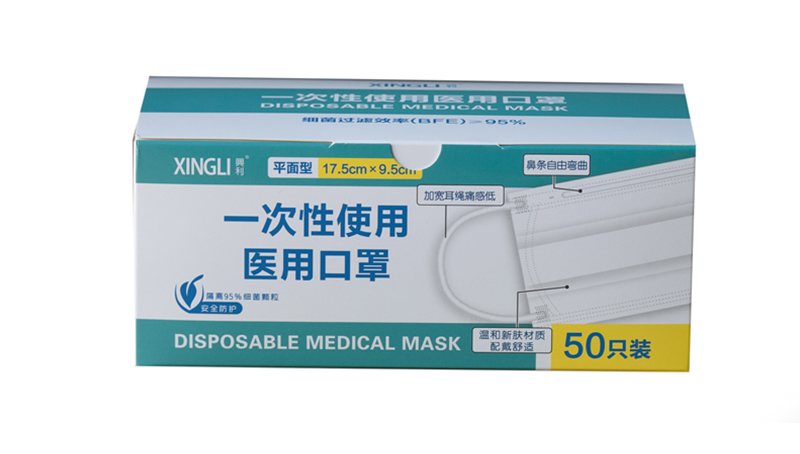
Mask requirements in the U.S. are being eased quickly, but many people say they plan to continue wearing them in certain circumstances — including during pollen season to reduce the appearance of allergies when sick,media reported. Pandemic safety measures, including social distancing and wearing masks, have reduced the number of observed influenza infections during the flu season -- they may have also eliminated the H3N2 influenza branch 3c3.A.

Of course, the pandemic has caused dramatic changes in the way people live and interact. People are mostly wearing masks, social distancing and various travel restrictions and testing requirements when they go out, and many are starting to wash their hands regularly.
So it's no surprise that the flu and common cold all but disappeared last winter. But experts warn that cold and flu rates could soar over the next one to two seasons as many people begin to forgo those safety measures. Going forward, however, it may be easier than ever to develop a flu vaccine to protect people during flu season.
Pandemic safety measures may have wiped out various types of influenza A (H3N2) viruses, according to Stat News, though it's not entirely certain yet. H3N2 viruses are more diverse than influenza A (H1N1) subtypes, making it tricky to distribute a vaccine to protect people from the dominant flu strains in any given season.
An international database was used to record influenza virus infections and monitor their evolution over time, the latter joining H3N2 3c3. The fork was uploaded to this database in March 2020. This information was provided by Trevor Bedford, a computational biologist at the Fred Hutchinson Cancer Research Center.
These flu viruses may still be circulating in some areas, and it's too early to say if they'll be gone forever. Yet pandemic safety measures like wearing masks may have reduced flu diversity.







Anhui Newtoshi Cleaning Products Co., Ltd. was established in July 2010 with a registered capital of 10 million yuan. The company is located in Zhongxiao Village Industrial Park, Wanshou Town, covering an area of 80,000 square meters. The company mainly produces disposable non-woven products such as disposable protective masks, disposable medical masks, KN95 masks, etc., and the raw materials for the production of ma…